Edit Chinese, Japanese and Korean Text in Images. Exact characters in. A careful review out.

Replace a short Chinese, Japanese or Korean phrase on your own artwork. Supply the precise characters and inspect strokes, punctuation and spacing.

Each submitted edit uses 1 credit. Review every result; lettering and background matches are approximate.

By continuing, you confirm you own this image or may edit it, and that the edit won't deceive anyone. IDs, certificates, bank records, receipts, payment proofs and chat screenshots aren't allowed. See our Acceptable Use Policy.

  • 1 free edit
  • No subscription
  • Credits never expire
  • Failed edits refunded
  • Unused credits refundable for 30 days
  • Commercial use on your images

What this tool does

No. It is an explicit replacement mode that asks the model to render your exact characters. Use Translate mode for translation, and always check the final pixels with a fluent reader.

Real results on controlled test artwork

Actual model requests on artwork we created, with raw outputs linked and limitations disclosed. These are not customer submissions.

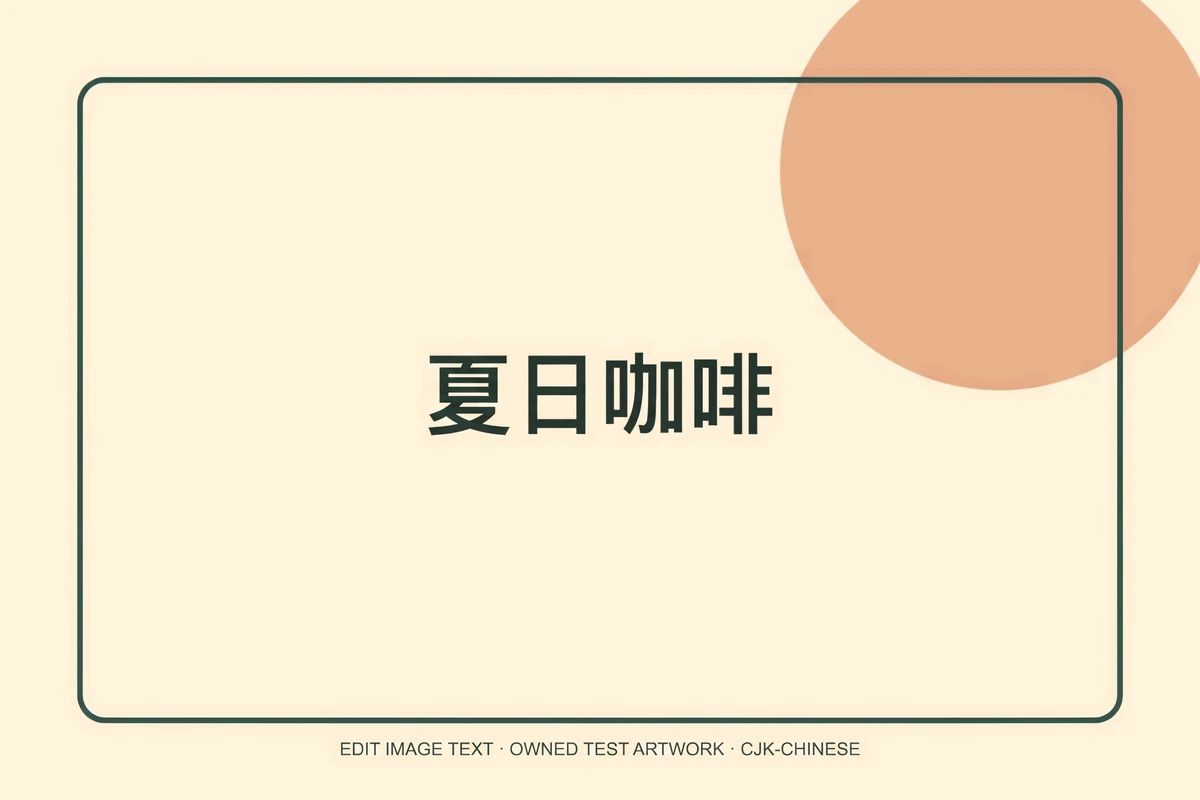
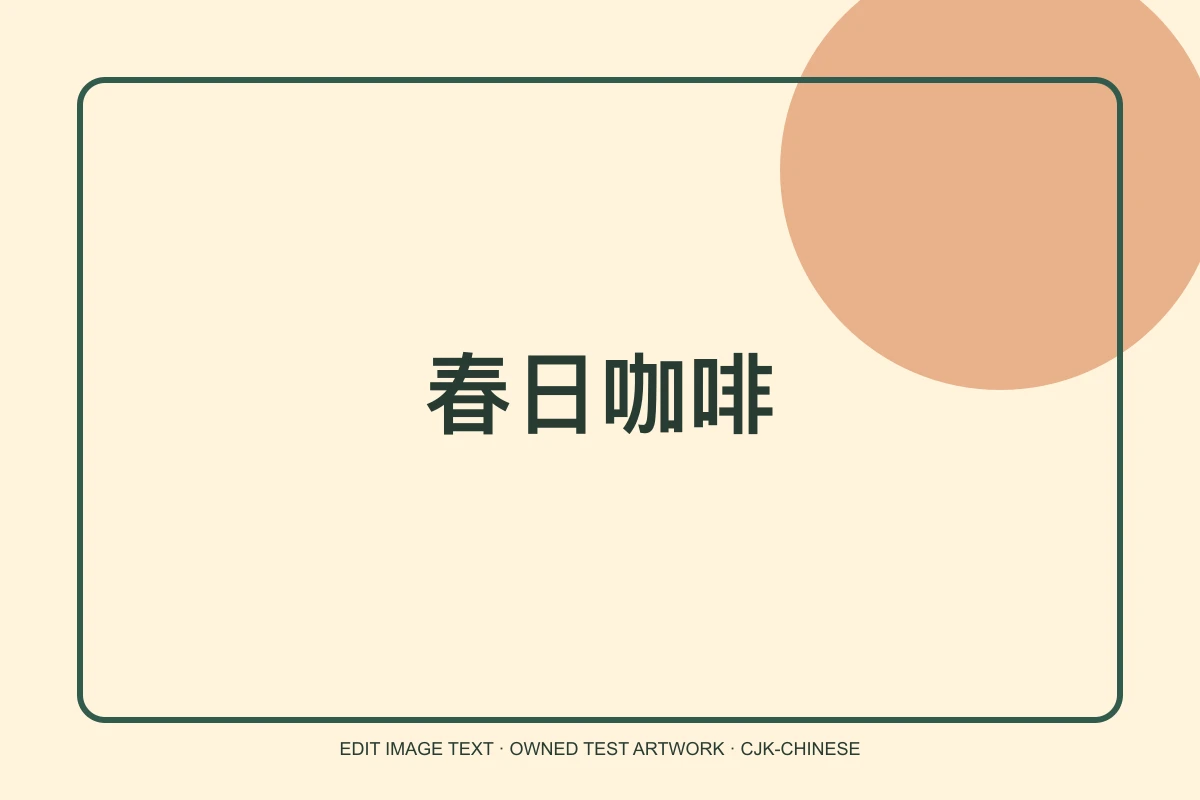
Actual composited result: 夏日咖啡
Owned test artwork before editing: 春日咖啡
BeforeAfter

Chinese

Simplified Chinese lettering

Actual Nano Banana Pro 2K request on artwork created for this controlled test. The after image uses the editor’s browser compositor; the unmodified model file is linked below.

Changed:
“春日咖啡” to “夏日咖啡”
Result:
Composited model result; 5% pixel-difference estimate, the rest restored from the original
Dimensions:
1200 × 800 input; 2528 × 1686 model output (2K tier)
Observed time:
44.7s for this controlled request
Review & test limits:
The supplied Chinese replacement is visible. Only a short horizontal phrase was tested; no font identity is claimed.
View unmodified model outputView original test input

Comparison images are web-optimized previews. Dimensions above describe the full model output; preview compression is not included in the pixel-difference estimate.
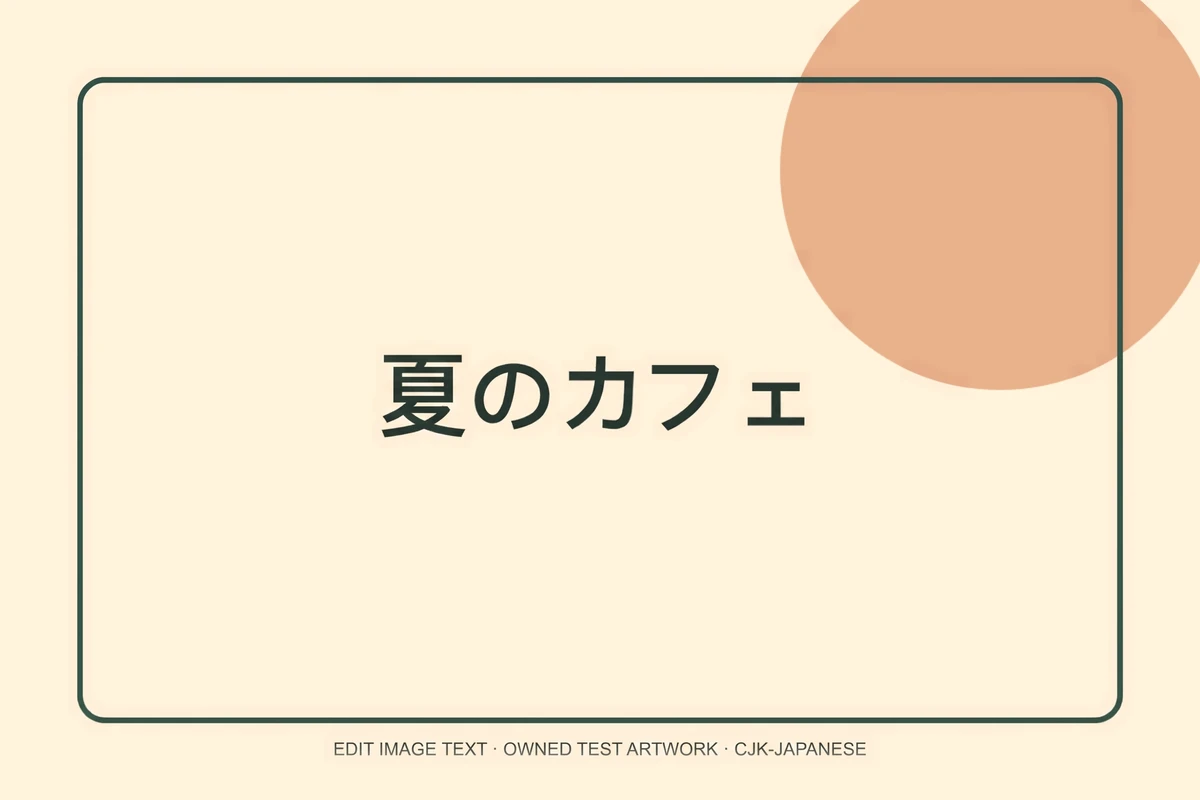
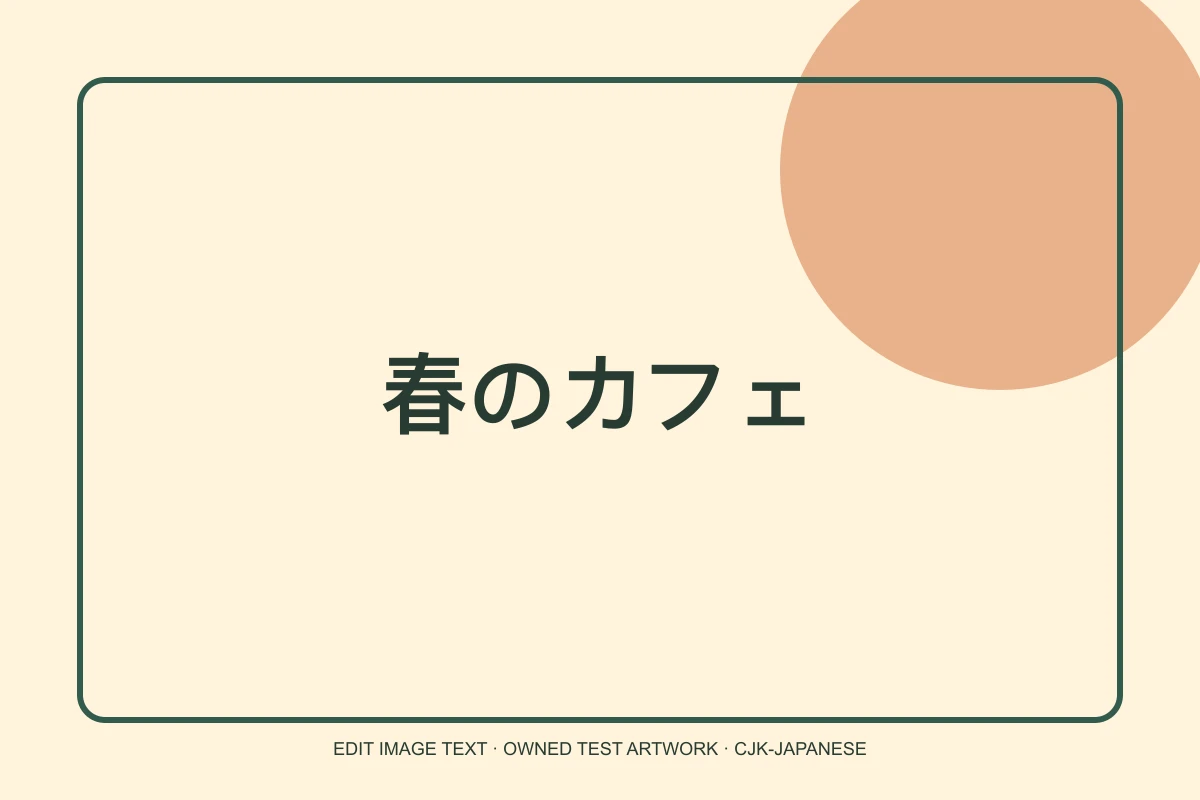
Actual composited result: 夏のカフェ
Owned test artwork before editing: 春のカフェ
BeforeAfter

Japanese

Japanese lettering

Actual Nano Banana Pro 2K request on artwork created for this controlled test. The after image uses the editor’s browser compositor; the unmodified model file is linked below.

Changed:
“春のカフェ” to “夏のカフェ”
Result:
Composited model result; 4.1% pixel-difference estimate, the rest restored from the original
Dimensions:
1200 × 800 input; 2528 × 1686 model output (2K tier)
Observed time:
38s for this controlled request
Review & test limits:
The supplied Japanese replacement is visible. Vertical writing, dense body text and mixed-script paragraphs were not tested.
View unmodified model outputView original test input

Comparison images are web-optimized previews. Dimensions above describe the full model output; preview compression is not included in the pixel-difference estimate.
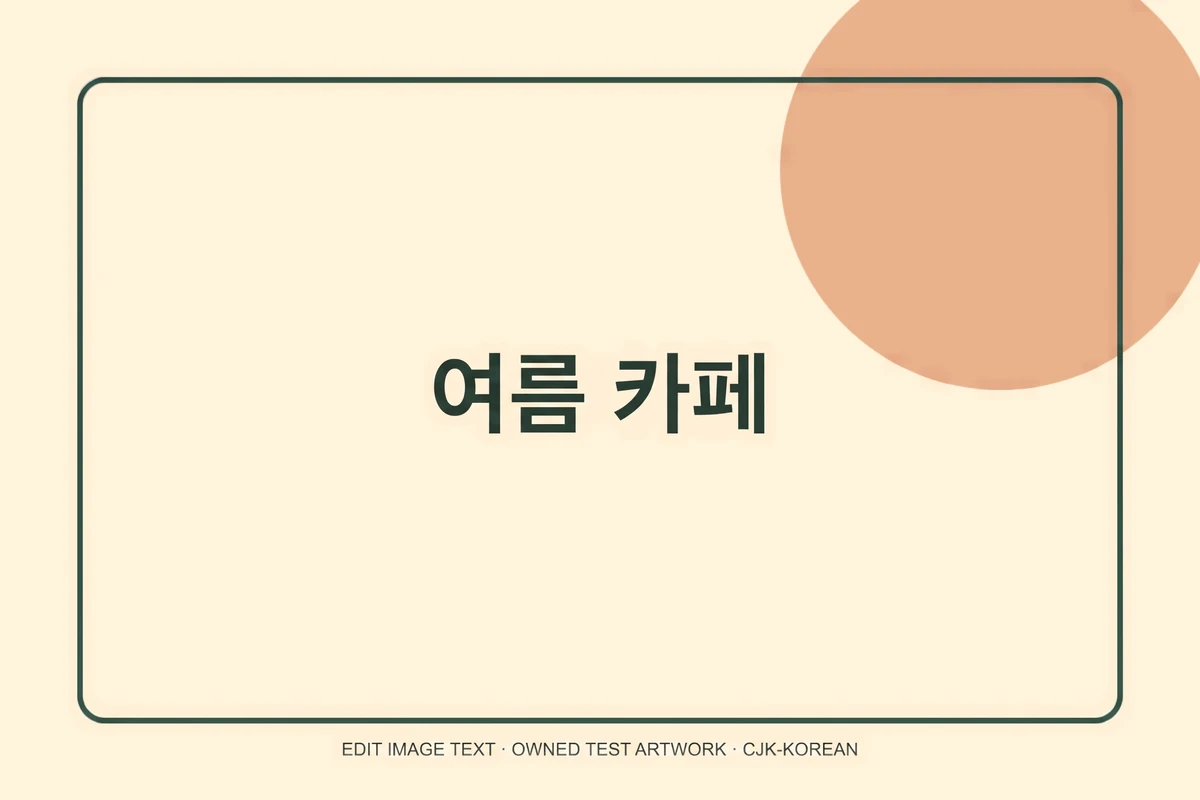
Actual composited result: 여름 카페
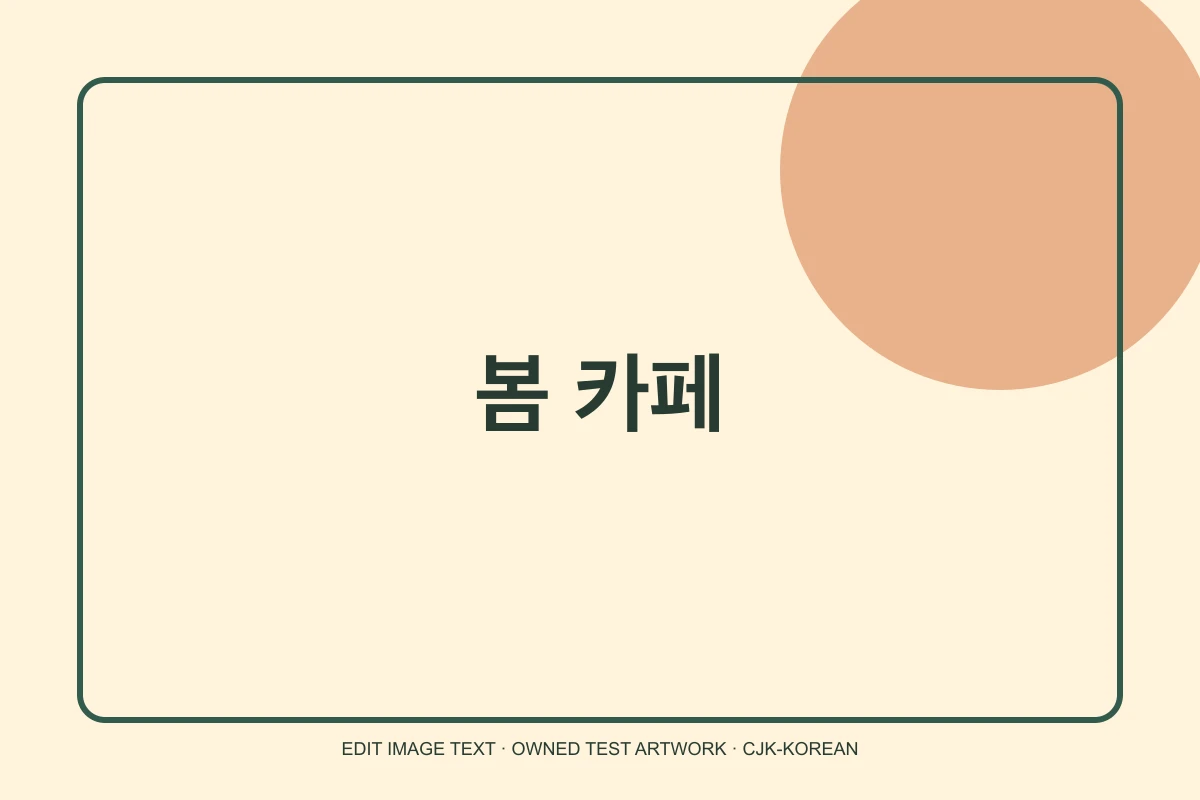
Owned test artwork before editing: 봄 카페
BeforeAfter

Korean

Korean lettering

Actual Nano Banana Pro 2K request on artwork created for this controlled test. The after image uses the editor’s browser compositor; the unmodified model file is linked below.

Changed:
“봄 카페” to “여름 카페”
Result:
Composited model result; 5.6% pixel-difference estimate, the rest restored from the original
Dimensions:
1200 × 800 input; 2528 × 1686 model output (2K tier)
Observed time:
61.3s for this controlled request
Review & test limits:
The supplied Korean phrase is visible. Fine syllable-block detail and other Korean typefaces need separate review.
View unmodified model outputView original test input

Comparison images are web-optimized previews. Dimensions above describe the full model output; preview compression is not included in the pixel-difference estimate.
See the sample sizes, timing and test methodology. A contained pixel difference is not proof of correct lettering.

How to approach this edit

CJK lettering can contain visually similar characters, dense strokes and punctuation whose position affects the meaning. Japanese may mix kanji, hiragana and katakana; Korean syllables group several components into one block. A plausible-looking result is not enough to establish correctness.

Paste the exact old and new phrases rather than romanized approximations. CJK mode asks the model to preserve the supplied characters and writing direction, without automatically converting simplified and traditional Chinese or rewriting the sentence.

Short horizontal phrases are the starting point tested here. Vertical layouts, calligraphy, tiny body text and mixed-language paragraphs require separate validation. Have a fluent reader inspect the rendered output, especially when the new phrase introduces characters absent from the source.

Practical uses

Short Chinese labels

Replace a known phrase using explicit characters.

Japanese headings

Review kanji and kana together in a short design label.

Korean artwork

Check each syllable block and word spacing after an edit.

Upload, specify and review

  1. 1

    Start with an image you may edit

    Use a sharp PNG, JPEG or WebP, up to 10 MB. Keep your untouched original. Signing in is required for uploads.

  2. 2

    Enter the exact old and new text

    Copy the existing phrase as it appears, then supply the intended replacement including capitals and punctuation.

  3. 3

    Inspect before downloading

    Review the whole image, the highlighted area and the lettering at full size. Check the actual output dimensions. Download PNG or JPG only when the result is suitable.

Capability boundaries

Vertical writing

Automatic line order and punctuation placement are not guaranteed.

Calligraphy and small strokes

Fine detail can become a different-looking character.

No silent script conversion

Supply simplified or traditional characters exactly as intended.

Frequently asked questions

Does CJK mode translate or correct the supplied phrase?

No. It is an explicit replacement mode that asks the model to render your exact characters. Use Translate mode for translation, and always check the final pixels with a fluent reader.

What does one request cost?

Each submitted edit uses 1 site credit. A new account gets 1 free edit; further credit packs start at $3.90. A technically failed task is refunded automatically. A returned image still needs your quality review.

Will the rest of the image be unchanged?

The model is asked for a localized change. Our browser check can restore the surrounding original when differences are contained, but this is a heuristic. Broad redraws and changed aspect ratios are flagged for review.

Is 2K output available?

Nano Banana Pro is requested at its 2K tier. Pixel dimensions depend on the model and aspect ratio. A larger export does not recover detail missing from a small upload; always inspect the actual dimensions.

How long does it take?

Processing time varies with the provider, image and workload. The task is saved and can be checked again without a second charge. See our performance page for measured samples rather than a promised completion time.

Are uploaded images private by default?

Uploads and results use public-by-link storage URLs in this version and are sent to the configured AI provider for processing. Do not upload confidential material. See the Privacy Policy for access and deletion details.

Try a small, reviewable edit

Start with one phrase on an image you own. Your first edit is free.

Upload your image